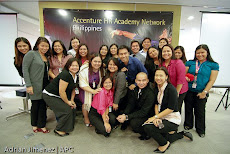
A few days ago I was speaking to a dear friend of mine. He enquired after my work and I recounted to him how busy I had been these past few months helping drive a big global change program within my organisation which was taking me to various parts of the world, while also trying to keep pace with some other interests...like helping develop next generation HR professionals and my involvement with Madura Microfinance. He listened intently to me and then suggested that I begin to chronicle insights which I was gaining through my pursuits. The idea resonated and I assured him I would give it a shot. And - as often happens to me these days - when I finally sat down on my laptop, no bright ideas and inspiring insights sprouted from the brain! I fell into a reverie and images of my college days flashed by...the period of my life when I was searching for a vocation to pursue.
So here goes - a journey that began in 1990 when I was in the second year of my undergraduate degree, wondering what the future held for me...
As my college years were drawing to a close, the question of which profession to pursue had become of utmost importance. Most of my friends were intent on a career in management, which became a natural choice for me as well. Like everyone else, I began the groundwork...learning about eligibility criteria and selection processes, getting to know which institutions to apply to, etc. Over time, people began preparation in earnest and pressure began to mount. Most of our conversations centred around our scores in mock tests, and how we felt about our chances to secure admission in a good university. During those early days of economic liberalisation, very few career options were available. For the vast majority of graduates in liberal arts who would live and work in India, management was a highly sought after choice. Hundreds of thousands of people competed fiercely for few seats in coveted institutions. Which meant that each one of us needed to be able to distinguish ourselves from scores of applicants and impress the selectors with our stellar managerial potential. So this was make or break time...
Most of my friends were determined to specialise in Marketing or Finance, as these offered the most lucrative opportunities in the long run. They all seemed clear and confident on the direction to take. I, on the other hand, was confused. I struggled to see myself making a living selling soaps and shampoos. Nor was the prospect of juggling numbers on balance sheets entirely fascinating. To make matters worse, my academic record of the past two years was highly unlikely to impress a jury of academicians. The freedom of being in college had led me to explore several interests, most of which happened to be outside of the classroom! Finally, in the midst of all the noise and pressure, I decided to go back to the basics and determine where I could fit in the grand scheme of this universe. There were a few questions needing answers. Did I even know what a career in management would feel like? What would I actually do? Would that be meaningful and enjoyable? Would I be good at it?
One day I walked up to the majestic library building in the JNU campus - one of the few privileges of living on a university campus - to seek some answers. I located the section on Management and began to browse the vast collection in search of a basic book that would teach me what management was all about. When I got back to my desk, I had a small stack of books. Over the next few hours I read about the various disciplines in management - Finance, Marketing, Information Technology, Operations...and finally Personnel Management...which caught my attention! I began to dive further ... recruitment, training, performance management, compensation. My interest was piqued and I read more in the coming days. I came across theories of motivation and behaviour and how organisations sought to align the needs of individuals and groups with their overall goals. It was all very fascinating. Surely this was a very special area. Wasn't this all about unlocking the potential of human beings within organisations? How cool would that be...
One of the characteristics of student life in India is how the elders within one's social ecosystem surround you to share their wisdom on the path to take in life. I too was not short of well wishers and advisers. When people learnt about my new found interest, I was cautioned against pursuing it...Personnel Management was considered to be a second tier management function. There were varying opinions and none sounded very encouraging...some said that it was just a drag on revenues. Others felt it was a political hotbed to broker deals between the top management and trade unions. Perceptions of being the proverbial agony aunt abounded. I listened with attention - all these people meant well - but everything I heard failed to alter my position. I remained steadfast in my desire to become a human resources professional.
Gaining an entry though turned out to be a totally different ballgame. In my first attempt, nearly all the leading management institutes rejected me. I did make it past written tests and got called for interviews. But none of the sincerity with which I explained my interest cut muster with the selectors. They frowned upon my average academic track record. Or tested my knowledge on completely unrelated areas. In an interview with one of India's leading management institutions, I was asked to expound on the Wiemar Republic...only because I had happened to mention that my father was a professor of modern European history!
It would take almost two years, several rejections (in some cases twice), a failed attempt as an apprentice in a firm of Chartered Accountants, as well as a stint in marketing research, before I finally walked in for my first lecture in a Master's programme in Personnel Management. Two years during which I had all but lost hope of pursuing my passion and was reconciling to a life of compromise.
I was immensely grateful for this opportunity, given that it had come to me after a protracted struggle. As a management student I worked hard, often blurring the distinction between day and night. I involved myself in activities of the institute and established a strong work ethic, something that has stayed with me till today. I was idealistic and rebellious at the same time, attending only those classes where I felt I had something new to learn...which once almost resulted in expulsion as my professor did not entirely agree with my point of view.
But more on that another day.
My travels have brought me back to Bangalore, and a Sunday brunch at my favourite restaurant awaits. With some cherished friends. And a Martini or two. Or more.
Showing posts with label Microfinance. Show all posts
Showing posts with label Microfinance. Show all posts
Sunday, February 20, 2011


Thursday, December 30, 2010
Retracing my steps to Vishesh Prarambh
Prolonged absence from one's vocation can have serious effects...the most pronounced being the loss of fluency of expression. Which I am currently experiencing in abundance. Writing does not come easy to me these days. Is it because of lack of quality time...or a lack of quality thinking, I wonder?
So as I sat in a cafe yesterday with the Singapore river flowing quietly behind me, I yearned for thoughts that I could pour onto the keyboard. Images of the year gone by flashed past and myriad thoughts crossed my mind...quite typical I suppose to reminsice as a year draws to a close. But these did not grab me for long. Sure it has been an eventful twelve months. Work took me to various places (repeatedly to USA but also within Asia and Europe) and I was privileged to have the opportunity to know and work with people from around the world. My involvement with maduramicrofinace.com continued and I am delighted to see the organisation marching forth with great energy and purpose. Personally, there were bittersweet moments as I rued the loss of friendships, whilst on the other hand new one's were formed. The most notable being with the four legged creature who roams around the premises as I write. And my health had held up, in no small measure due to a wonderful and caring trainer who has helped me stay fit despite a fairly erratic lifestyle.
While there were events and moments of consequence in 2010, it seemed there was something of greater relevance which I could vaguely sense but was unable to fully comprehend. What was it that was gnawing at the back of my mind?? Why did it feel like I needed to delve deeper into my consciousness?
Finally, as the double espresso worked its way down my throat, the mist surrounding my being began to clear...with almost a sudden and jarring realisation that the first decade of the 21st century was about to end! Just then I felt the weight of these momentous years.
A decade...
...which had seen me moving out of my hometown to go and live in 3 different cities across 2 countries
...that literally consumed my 30's (quite a distressing thought - the impending 40's!)
...which felt like a lifetime...of learning, loving, leaving, gaining, losing, regaining, climbing, falling, leading, following, succeeding, failing...even (almost) succumbing and being returned to life
Indeed, this decade has been of consequence! And as the lights of 2010 begin to flicker, I feel a strong desire to internalise this period of my life. Perhaps in the coming days realisation shall dawn and find its way to the portals of Vishesh Prarambh...or maybe they will stay in the deep recesses of my mind! Who knows...
One recent event though must surely have its pride of place among these pages...Kulfi is now one year old! And I can't help feeling that he just arrived yesterday...


So as I sat in a cafe yesterday with the Singapore river flowing quietly behind me, I yearned for thoughts that I could pour onto the keyboard. Images of the year gone by flashed past and myriad thoughts crossed my mind...quite typical I suppose to reminsice as a year draws to a close. But these did not grab me for long. Sure it has been an eventful twelve months. Work took me to various places (repeatedly to USA but also within Asia and Europe) and I was privileged to have the opportunity to know and work with people from around the world. My involvement with maduramicrofinace.com continued and I am delighted to see the organisation marching forth with great energy and purpose. Personally, there were bittersweet moments as I rued the loss of friendships, whilst on the other hand new one's were formed. The most notable being with the four legged creature who roams around the premises as I write. And my health had held up, in no small measure due to a wonderful and caring trainer who has helped me stay fit despite a fairly erratic lifestyle.
While there were events and moments of consequence in 2010, it seemed there was something of greater relevance which I could vaguely sense but was unable to fully comprehend. What was it that was gnawing at the back of my mind?? Why did it feel like I needed to delve deeper into my consciousness?
Finally, as the double espresso worked its way down my throat, the mist surrounding my being began to clear...with almost a sudden and jarring realisation that the first decade of the 21st century was about to end! Just then I felt the weight of these momentous years.
A decade...
...which had seen me moving out of my hometown to go and live in 3 different cities across 2 countries
...that literally consumed my 30's (quite a distressing thought - the impending 40's!)
...which felt like a lifetime...of learning, loving, leaving, gaining, losing, regaining, climbing, falling, leading, following, succeeding, failing...even (almost) succumbing and being returned to life
Indeed, this decade has been of consequence! And as the lights of 2010 begin to flicker, I feel a strong desire to internalise this period of my life. Perhaps in the coming days realisation shall dawn and find its way to the portals of Vishesh Prarambh...or maybe they will stay in the deep recesses of my mind! Who knows...
One recent event though must surely have its pride of place among these pages...Kulfi is now one year old! And I can't help feeling that he just arrived yesterday...


Sunday, July 25, 2010
Let's just get out of the way!
Twenty flights, mostly long haul and some less so, weaving in and out of airports some thirty odd times over a nine week period. That pretty much summed up my life this summer. My work, enjoyable as it was, had kept me on my toes and also up in the air.
So when I trudged into the Chennai office of Madura (http://www.maduramicrofinance.com/) a couple of days after returning from yet another grueling trip to US, I should have been a tired man. I was there for a Board meeting and to work with new members of the leadership team on their expansion plans. But the two days I spent there turned out to so energizing that fatigue evaporated even before it could set in. Some weeks have gone by since my visit but I still find myself smiling as I reflect on the conversations we had and the experiments we decided to enact.
My association with Madura began over a year ago. I had been looking for opportunities to work with people engaged in bridging the gap between those with education and access and those without. Madura was embarking on significant growth plans and wanted to have a person on the Board with experience of scaling an organisation. We found each other thanks to a helpful friend. Over the next few months, I made several visits and got an opportunity to see the impact of the organisation up close. Madura was preparing for the next phase of evolution with diligence and focus. They scouted for senior management professionals to complement the highly dedicated staff that had brought the organisation through its various phases of evolution. I participated as I could – joining in the selection process and decision making, sometimes in person and at other times over skype or phone, from whichever part of the world I happened to be in. In a surprisingly short time, new members of the management team had been recruited and they were ready and raring to go!
So the July meeting was of significance. The Board had shown up in full strength. The customary quarterly performance update was given and plans for the future were laid out. There were new ideas aplenty, confidently presented by a young and driven crop of managers. Their voices mingled with those of industry stalwarts who had spent their lifetimes building and nurturing some of the leading organisations in India. There were emotional moments. Senior Board members who had seen the organisation from its inception and deeply cared about the vision of its late founder were heartened to see the new generation propelling it forward with energy and conviction. By the end of the day, there was energy, optimism and warmth all around.
The day after the board meeting was all about people…what would our strategy be to grow the organisation? How would we preserve its culture as we grew manifold? A smaller group had gathered to deliberate on these matters. Still in the afterglow of the previous day's events, I had some nagging thoughts at the back of my mind. I was really trying to understand what made this organisation what it was…what was its secret sauce? How could I contribute to its future unless I really understood its DNA? So I decided to seek answers from people in the room. There was the Chairperson, Tara (check out http://physicsofpoverty.blogspot.com/ for some remarkable insights), Sandeep - Board member and Founder of Elevar (http://www.elevarequity.com/), and David, the new Executive Director (http://www.davidappasamy.blogspot.com/).
What happened thereafter was magical...
The picture of Madura that emerged was unique and paradoxical at the same time!
The company had been in the business of microfinance for the past fifteen years, operating within the villages of Tamil Nadu in south India. It had a long history of serving the rural poor. Over the years, the organisation had gone through difficult times as it changed hands, lost its revered founder, and rallied around to eventually emerge stronger. So much so that in 2007, Forbes ranked it as the world's most cost effective provider of microfinance. On any financial metric, Madura was off the industry charts for a company of that scale in India. Lowest rate of lending (by a significant margin compared to its nearest rivals), very low operating costs, excellent rate of loan repayment, high customer retention...
We had all been to the field and met frontline employees as well as customers. There was unanimity in our observations...never before had we met a more committed set of people who were so totally immersed in the mission of the organisation. Their emotional connect to the purpose was unparalleled. They had extreme cost sensitivity – not wanting to ever burden the poor. Employees went beyond the call of duty in serving their customers, who in turn regarded the field staff as one of their own. Several members of management had been with the organisation for decades in its earlier avatar as a bank. I had once witnessed a training session in progress and I couldn't believe how openly they embraced the new practices being propagated. Trust levels were obviously very high - not just between employees and management, but also how the borrowers looked upon the company. One defining, and unique, characteristic of Madura was blurring of the distinction between employee and customer...in many ways, they were practically the same! Several employees were women who had started out as borrowers, and over a period of time gained the means and skills to contribute. They imbibed the mission of helping others progress from poverty and eventually joined the company. As I learnt later, even senior functionaries had taken salary cuts to come on board.
Yet, in some aspects the way the company operated defied conventional management wisdom. Madura was not awash with a bevy of management practices...manuals, well documented role definitions, performance appraisal processes and the like. Until recently, they did not have formal heads for some of their key functional areas. The leadership team had not been driving 'top down' messages through the organisation. The obvious controls were financial and statutory in nature, with extensive use of mobile phone technology. Even field staff - the sales force - were not given set targets to perform to! They would simply go into the villages, form Self Help Groups (SHG) of women, mentor them in various aspects of entrepreneurship and provide useful information to enable them.
What then explains the results? How could this organisation outperform on every conceivable commercial parameter without embracing basic management practices?
We eventually agreed that it would be hard for us to understand till we ourselves unlearned…discarding the familiar so we could embrace the subtleties of this wonderful ecosystem. One decision was clear - until we knew any better, we would not impose upon it our myopic views and conditioned responses...in fact, we would do quite the opposite. The customers would decide and the employees would serve.
As for the Board and management, let’s just get out of the way!
So when I trudged into the Chennai office of Madura (http://www.maduramicrofinance.com/) a couple of days after returning from yet another grueling trip to US, I should have been a tired man. I was there for a Board meeting and to work with new members of the leadership team on their expansion plans. But the two days I spent there turned out to so energizing that fatigue evaporated even before it could set in. Some weeks have gone by since my visit but I still find myself smiling as I reflect on the conversations we had and the experiments we decided to enact.
My association with Madura began over a year ago. I had been looking for opportunities to work with people engaged in bridging the gap between those with education and access and those without. Madura was embarking on significant growth plans and wanted to have a person on the Board with experience of scaling an organisation. We found each other thanks to a helpful friend. Over the next few months, I made several visits and got an opportunity to see the impact of the organisation up close. Madura was preparing for the next phase of evolution with diligence and focus. They scouted for senior management professionals to complement the highly dedicated staff that had brought the organisation through its various phases of evolution. I participated as I could – joining in the selection process and decision making, sometimes in person and at other times over skype or phone, from whichever part of the world I happened to be in. In a surprisingly short time, new members of the management team had been recruited and they were ready and raring to go!
So the July meeting was of significance. The Board had shown up in full strength. The customary quarterly performance update was given and plans for the future were laid out. There were new ideas aplenty, confidently presented by a young and driven crop of managers. Their voices mingled with those of industry stalwarts who had spent their lifetimes building and nurturing some of the leading organisations in India. There were emotional moments. Senior Board members who had seen the organisation from its inception and deeply cared about the vision of its late founder were heartened to see the new generation propelling it forward with energy and conviction. By the end of the day, there was energy, optimism and warmth all around.
The day after the board meeting was all about people…what would our strategy be to grow the organisation? How would we preserve its culture as we grew manifold? A smaller group had gathered to deliberate on these matters. Still in the afterglow of the previous day's events, I had some nagging thoughts at the back of my mind. I was really trying to understand what made this organisation what it was…what was its secret sauce? How could I contribute to its future unless I really understood its DNA? So I decided to seek answers from people in the room. There was the Chairperson, Tara (check out http://physicsofpoverty.blogspot.com/ for some remarkable insights), Sandeep - Board member and Founder of Elevar (http://www.elevarequity.com/), and David, the new Executive Director (http://www.davidappasamy.blogspot.com/).
What happened thereafter was magical...
The picture of Madura that emerged was unique and paradoxical at the same time!
The company had been in the business of microfinance for the past fifteen years, operating within the villages of Tamil Nadu in south India. It had a long history of serving the rural poor. Over the years, the organisation had gone through difficult times as it changed hands, lost its revered founder, and rallied around to eventually emerge stronger. So much so that in 2007, Forbes ranked it as the world's most cost effective provider of microfinance. On any financial metric, Madura was off the industry charts for a company of that scale in India. Lowest rate of lending (by a significant margin compared to its nearest rivals), very low operating costs, excellent rate of loan repayment, high customer retention...
We had all been to the field and met frontline employees as well as customers. There was unanimity in our observations...never before had we met a more committed set of people who were so totally immersed in the mission of the organisation. Their emotional connect to the purpose was unparalleled. They had extreme cost sensitivity – not wanting to ever burden the poor. Employees went beyond the call of duty in serving their customers, who in turn regarded the field staff as one of their own. Several members of management had been with the organisation for decades in its earlier avatar as a bank. I had once witnessed a training session in progress and I couldn't believe how openly they embraced the new practices being propagated. Trust levels were obviously very high - not just between employees and management, but also how the borrowers looked upon the company. One defining, and unique, characteristic of Madura was blurring of the distinction between employee and customer...in many ways, they were practically the same! Several employees were women who had started out as borrowers, and over a period of time gained the means and skills to contribute. They imbibed the mission of helping others progress from poverty and eventually joined the company. As I learnt later, even senior functionaries had taken salary cuts to come on board.
Yet, in some aspects the way the company operated defied conventional management wisdom. Madura was not awash with a bevy of management practices...manuals, well documented role definitions, performance appraisal processes and the like. Until recently, they did not have formal heads for some of their key functional areas. The leadership team had not been driving 'top down' messages through the organisation. The obvious controls were financial and statutory in nature, with extensive use of mobile phone technology. Even field staff - the sales force - were not given set targets to perform to! They would simply go into the villages, form Self Help Groups (SHG) of women, mentor them in various aspects of entrepreneurship and provide useful information to enable them.
What then explains the results? How could this organisation outperform on every conceivable commercial parameter without embracing basic management practices?
We eventually agreed that it would be hard for us to understand till we ourselves unlearned…discarding the familiar so we could embrace the subtleties of this wonderful ecosystem. One decision was clear - until we knew any better, we would not impose upon it our myopic views and conditioned responses...in fact, we would do quite the opposite. The customers would decide and the employees would serve.
As for the Board and management, let’s just get out of the way!
Saturday, August 22, 2009
A trip to South India
It is my second evening in the Austrian mountains and a new bottle of wine. Tonight it’s a Cuvee – a delicious and smooth blend of different grapes from the region. I don’t know much about wines...just that they have recently caught my fancy and I have decided to explore them during my week in Europe. It has been raining since afternoon and the alpine air is wonderfully invigorating.
And as I sit in the hotel lounge, I again reflect on the events of the past few weeks.
The high point for me this summer was undoubtedly my visit to Chennai and Madurai last month. A visit that gave me an opportunity to see the impact being made by a microfinance organisation that was deeply committed to serving the poor by providing rural women with the means to achieve economic independence. When I visited the villages where they operated, I saw first hand how they had provided people the skills and means to emerge from poverty and attain a sustainable livelihood.
This opportunity arose thanks to a dear friend with whom I have worked closely for several years. She has now moved beyond the security and comfort of a career in the corporate sector and embarked upon a new journey as a social entrepreneur. Recently, she was approached by an acquaintance, a private equity investor in the social sector, whose fund had invested in this company and where he was a board member. They were looking for an experienced HR professional to serve as a strategic advisor, poised as they are for significant growth in the near future and felt they needed to really get the people equation right. She suggested my name and a few phone calls later introductions were made, connections established, and off I was to see how I could be of assistance in their noble venture.
What I experienced over the course of the next two days left a lasting impression on me and I came away with deep appreciation both for the dedication of these people, as well for their creativity and innovation.
I was received in Chennai by their Chairperson, a woman of very impressive credentials, who took me to a charming old house which served as the company headquarters. The private equity investor also flew in and over the next few hours, we had a spirited and absorbing discussion as they brought me up to speed on the nature of their work. By the end of the day, and several copious notes later, I had received my initiation into the fascinating world of microfinance. As I would realize a day later, this was just my ‘theory’ lesson. The ‘practical’ was to take place the following day through a field visit to the villages.
The next morning we took a 7am flight to Madurai, a small town in the very south of India. I had visited Madurai twenty years ago with my parents while on a summer vacation trip across south India and remember seeing the grand Meenakshi temple, which has lent fame to this town as it attracts both pilgrims and tourists from far and wide. This time though, the day was spent touring villages and branch offices of the company in and around the town. I was accompanied by the Chairperson, who also played the role of translator for most of the day as conversations took place in the local lingo - Tamil. I met with Self Help Groups (SHG) – clusters of 15-20 women organized by the microfinance company for the purpose of providing loans – and saw how they were educated and empowered to take charge of their lives. For most of these women, the journey to self-reliance began with an enrolment into a SHG, an entity that would form the edifice for much of their future existence and the foundation for lasting relationships with others united by a common desire to achieve economic independence and well being for their families. Each SHG would undergo months of training in entrepreneurship and basic finance and accounts. When considered ready, they would receive their group loan…which they would utilize to start a business venture. Some would purchase cattle, others would start a tailoring business, or else make trinkets and toys for children. Each month, the loan installment would need to be repaid and the group would be collectively responsible for ensuring timely payouts. The organisation has a quarter of a million women customers across the state, and an astounding recovery rate which would be the envy of mainstream banks. Just goes to prove the transformational power of enlightened and determined women.
One of the truly remarkable aspects of this organisation was their conscious desire to employ people from the very strata they serviced. This serves a dual purpose…of building trusting relationships within their customer base by being deeply etched in their lives; and underscoring their commitment to improving the lives of people in the rural areas by providing gainful employment to deserving candidates. The results - strong trust based relationships, a stellar reputation and a lasting impact on society!
I came across some astounding tales of human accomplishment.
We were accompanied in our field visit by the regional manager, a middle aged lady who oversaw operations across several branches. She spoke to me of her humble beginnings, from the time she had been a beneficiary of microfinance from this company 15 years ago. Starting off from a meager background (her husband was a daily wage labourer with a low and inconsistent income stream), this lady not only found a means to livelihood for her family, she took greater initiative by first becoming an employee of the company and forming more SHG’s, and in parallel pursuing higher studies, eventually completing a Master’s degree in commerce. Her three sons were now based in countries in the Middle East – all gainfully employed, with the eldest enrolled into a Ph.D. programme! This woman has worked tirelessly and risen to the position of regional head with oversight of several of the company’s branch operations. Recently, she has bought a computer and an internet connection and is learning to operate it.
There were more such stories…
The other revelation was the creativity and innovation in the social sector. The network of SHG’s is an extremely effective distribution channel and can be used as a conduit for several other ‘products’ – basic mobile phones, insurance plans, education and healthcare being a few examples. As technological advancements take effect, some of these will have a significant effect on the fabric of rural society. Imagine the impact of people in remote villages with access to information on their fingertips, combined with the ability to transmit it real time anywhere across the world. I feel this can lay the ground for transformation at the grassroots level. Such technology gives power in the hands of people and can help expose corruption, lay bare inefficiencies, and fight injustice…instantly and without censorship from any governing body!
I witnessed one such innovation. We had reached one of their branch offices in a semi-urban area of Madurai. This was in the upper floor of a small house in a narrow street reachable only on foot. On the day I was there, there had been a load shedding – long hours of electricity shut down - in that part of town. As we looked across the office, I noticed a printer on a table…this was their ‘collections’ room where they kept records of loan disbursement and repayment. The standalone printer was unaccompanied by a computer, something one would naturally expect to see in an operation that dealt with finances. When I enquired about how they managed accounts, the answer left me stunned with amazement. The collections officer, a 30 year veteran of the company whipped out his mobile phone and activated an application. Upon punching in a password, the screen came alive with up-to-date information on every SHG supported by the branch and the current status of loan repayment of each individual member! This information was fed and refreshed at the company headquarters in Chennai and all that was needed was for him to jack up the phone to the printer, produce the latest records and issue receipts to the customers every month! In one fell sweep, this innovation had significantly reduced the need physical infrastructure, reliance on electricity, and also the risk of fraud by unscrupulous employees. Grassroots technology at its very best!
My trip was an eye opener. I came away energized and refreshed from my interactions with these wonderful people. I spent the next few days thinking about how this organisation could harness its human potential and further its impact on the society. My past experiences provided some answers, but more came from friends who have immersed themselves to such causes. Today I see capable and highly qualified people who have chosen to dedicate themselves to bringing about sustainable and equitable development, rather than pursue the path of purely personal gains.
The wheels...they are surely turning!
And as I sit in the hotel lounge, I again reflect on the events of the past few weeks.
The high point for me this summer was undoubtedly my visit to Chennai and Madurai last month. A visit that gave me an opportunity to see the impact being made by a microfinance organisation that was deeply committed to serving the poor by providing rural women with the means to achieve economic independence. When I visited the villages where they operated, I saw first hand how they had provided people the skills and means to emerge from poverty and attain a sustainable livelihood.
This opportunity arose thanks to a dear friend with whom I have worked closely for several years. She has now moved beyond the security and comfort of a career in the corporate sector and embarked upon a new journey as a social entrepreneur. Recently, she was approached by an acquaintance, a private equity investor in the social sector, whose fund had invested in this company and where he was a board member. They were looking for an experienced HR professional to serve as a strategic advisor, poised as they are for significant growth in the near future and felt they needed to really get the people equation right. She suggested my name and a few phone calls later introductions were made, connections established, and off I was to see how I could be of assistance in their noble venture.
What I experienced over the course of the next two days left a lasting impression on me and I came away with deep appreciation both for the dedication of these people, as well for their creativity and innovation.
I was received in Chennai by their Chairperson, a woman of very impressive credentials, who took me to a charming old house which served as the company headquarters. The private equity investor also flew in and over the next few hours, we had a spirited and absorbing discussion as they brought me up to speed on the nature of their work. By the end of the day, and several copious notes later, I had received my initiation into the fascinating world of microfinance. As I would realize a day later, this was just my ‘theory’ lesson. The ‘practical’ was to take place the following day through a field visit to the villages.
The next morning we took a 7am flight to Madurai, a small town in the very south of India. I had visited Madurai twenty years ago with my parents while on a summer vacation trip across south India and remember seeing the grand Meenakshi temple, which has lent fame to this town as it attracts both pilgrims and tourists from far and wide. This time though, the day was spent touring villages and branch offices of the company in and around the town. I was accompanied by the Chairperson, who also played the role of translator for most of the day as conversations took place in the local lingo - Tamil. I met with Self Help Groups (SHG) – clusters of 15-20 women organized by the microfinance company for the purpose of providing loans – and saw how they were educated and empowered to take charge of their lives. For most of these women, the journey to self-reliance began with an enrolment into a SHG, an entity that would form the edifice for much of their future existence and the foundation for lasting relationships with others united by a common desire to achieve economic independence and well being for their families. Each SHG would undergo months of training in entrepreneurship and basic finance and accounts. When considered ready, they would receive their group loan…which they would utilize to start a business venture. Some would purchase cattle, others would start a tailoring business, or else make trinkets and toys for children. Each month, the loan installment would need to be repaid and the group would be collectively responsible for ensuring timely payouts. The organisation has a quarter of a million women customers across the state, and an astounding recovery rate which would be the envy of mainstream banks. Just goes to prove the transformational power of enlightened and determined women.
One of the truly remarkable aspects of this organisation was their conscious desire to employ people from the very strata they serviced. This serves a dual purpose…of building trusting relationships within their customer base by being deeply etched in their lives; and underscoring their commitment to improving the lives of people in the rural areas by providing gainful employment to deserving candidates. The results - strong trust based relationships, a stellar reputation and a lasting impact on society!
I came across some astounding tales of human accomplishment.
We were accompanied in our field visit by the regional manager, a middle aged lady who oversaw operations across several branches. She spoke to me of her humble beginnings, from the time she had been a beneficiary of microfinance from this company 15 years ago. Starting off from a meager background (her husband was a daily wage labourer with a low and inconsistent income stream), this lady not only found a means to livelihood for her family, she took greater initiative by first becoming an employee of the company and forming more SHG’s, and in parallel pursuing higher studies, eventually completing a Master’s degree in commerce. Her three sons were now based in countries in the Middle East – all gainfully employed, with the eldest enrolled into a Ph.D. programme! This woman has worked tirelessly and risen to the position of regional head with oversight of several of the company’s branch operations. Recently, she has bought a computer and an internet connection and is learning to operate it.
There were more such stories…
The other revelation was the creativity and innovation in the social sector. The network of SHG’s is an extremely effective distribution channel and can be used as a conduit for several other ‘products’ – basic mobile phones, insurance plans, education and healthcare being a few examples. As technological advancements take effect, some of these will have a significant effect on the fabric of rural society. Imagine the impact of people in remote villages with access to information on their fingertips, combined with the ability to transmit it real time anywhere across the world. I feel this can lay the ground for transformation at the grassroots level. Such technology gives power in the hands of people and can help expose corruption, lay bare inefficiencies, and fight injustice…instantly and without censorship from any governing body!
I witnessed one such innovation. We had reached one of their branch offices in a semi-urban area of Madurai. This was in the upper floor of a small house in a narrow street reachable only on foot. On the day I was there, there had been a load shedding – long hours of electricity shut down - in that part of town. As we looked across the office, I noticed a printer on a table…this was their ‘collections’ room where they kept records of loan disbursement and repayment. The standalone printer was unaccompanied by a computer, something one would naturally expect to see in an operation that dealt with finances. When I enquired about how they managed accounts, the answer left me stunned with amazement. The collections officer, a 30 year veteran of the company whipped out his mobile phone and activated an application. Upon punching in a password, the screen came alive with up-to-date information on every SHG supported by the branch and the current status of loan repayment of each individual member! This information was fed and refreshed at the company headquarters in Chennai and all that was needed was for him to jack up the phone to the printer, produce the latest records and issue receipts to the customers every month! In one fell sweep, this innovation had significantly reduced the need physical infrastructure, reliance on electricity, and also the risk of fraud by unscrupulous employees. Grassroots technology at its very best!
My trip was an eye opener. I came away energized and refreshed from my interactions with these wonderful people. I spent the next few days thinking about how this organisation could harness its human potential and further its impact on the society. My past experiences provided some answers, but more came from friends who have immersed themselves to such causes. Today I see capable and highly qualified people who have chosen to dedicate themselves to bringing about sustainable and equitable development, rather than pursue the path of purely personal gains.
The wheels...they are surely turning!
Subscribe to:
Posts (Atom)